

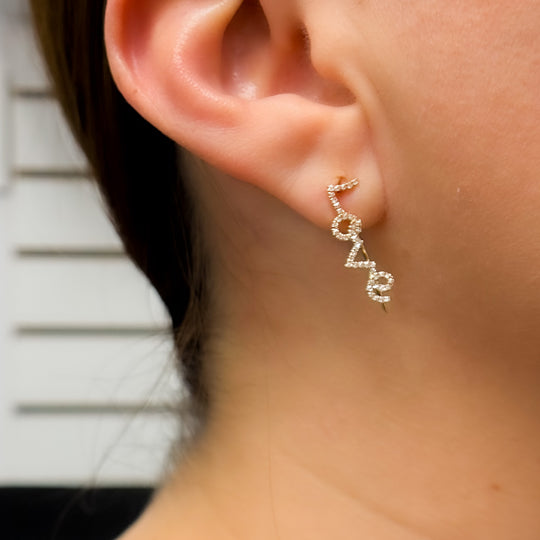
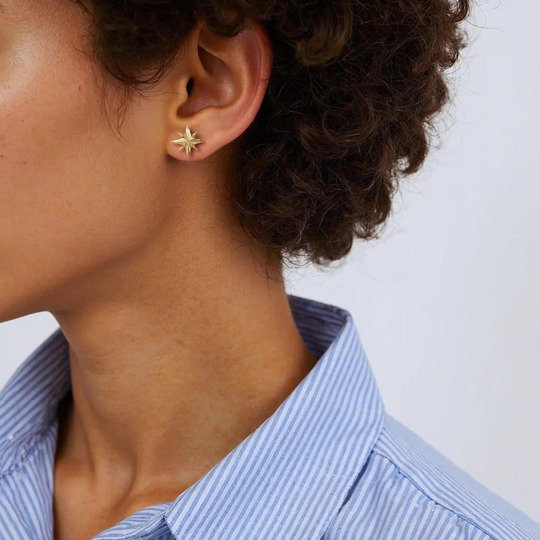
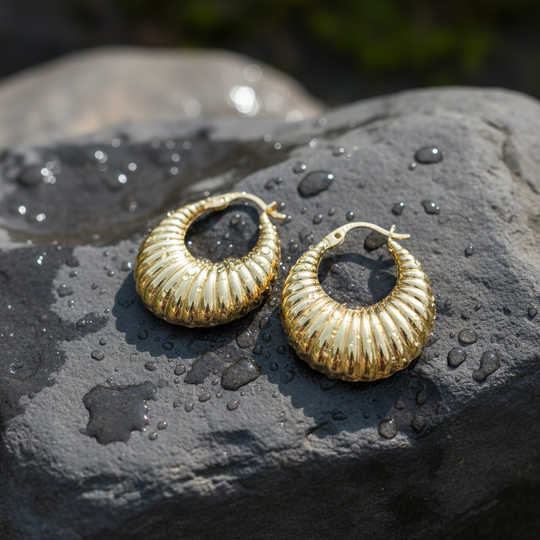
Stud Earrings for Women: The Complete Buying Guide You Actually Need
Every woman owns at least one pair of stud earrings. Most own several. And yet, most buying decisions still come down to "it looks pretty" and nothing else.
That is how women end up with earrings that turn their ears green, stones that fall out after six months, and posts that bend the first time they accidentally sleep in them.
Stud earrings for women are the most purchased earring style in the world for a reason. They work with everything. They suit every age. They go from a morning meeting to a dinner without you changing them. But the range of quality across the market is enormous, and buying the wrong pair at the wrong price is a mistake that repeats itself until you understand what separates a good stud from a bad one.
This guide covers all of it. Metal types, stone options, karat differences, setting styles, size guidelines, and the specific questions you should be asking before you spend a single dollar. Whether you are buying your first pair of gold studs or upgrading to diamonds, this is the information that separates a purchase you will wear for twenty years from one you will regret inside six months.
Why Stud Earrings Have Never Gone Out of Style
Fashion moves fast. Hoops go oversized then come back minimal. Dangles trend then disappear. Stud earrings for women have stayed relevant for over a century without interruption.
The reason is function, not trend.
Studs sit flush against the earlobe. They do not snag on hair, scarves, or phone cases. They work with short hair and long hair equally. They do not create tension on the earlobe the way heavy drop earrings do, which means you can wear them all day without discomfort.
Beyond practicality, a well-made stud earring carries visual weight that bigger earrings often cannot. A single round diamond set in a four-prong gold setting communicates elegance in a way that a large chandelier earring often over-explains. Studs let the quality of the piece speak for itself.
That is exactly why buying quality matters more with studs than with any other earring type. There is nowhere to hide poor craftsmanship. Every detail is visible.
Gold vs Silver vs Rose Gold: Which Metal Is Right for You?
The metal choice is the first decision and it affects everything else, from durability to skin compatibility to how the earring pairs with your wardrobe.
Gold Stud Earrings for Women
Gold is the standard for fine jewelry studs. It does not tarnish, does not react with skin, and holds its value over time.
|
Karat |
Gold Purity |
Best For |
|
10K |
41.7% |
Budget everyday wear |
|
14K |
58.5% |
Best balance of durability and purity |
|
18K |
75% |
Sensitive skin, premium pieces |
|
24K |
99.9% |
Too soft for earrings, not recommended |
14K gold stud earrings for women are the most practical choice for daily wear. The alloy metals added to reach 14K make the gold harder and more scratch-resistant than higher karat options. Most fine jewelry sold in the United States is 14K for this reason.
18K gold is softer but purer. If you have a nickel sensitivity, 18K yellow gold is often a better choice because it typically contains less nickel than 14K white gold alloys.
Silver Stud Earrings for Women
Silver costs significantly less than gold and has a cool-toned look that pairs well with certain skin tones and wardrobe styles. The concern with silver is tarnish. Pure silver reacts with sulfur in the air and darkens over time.
Sterling silver stud earrings for women are 92.5% silver with 7.5% added metals for strength. Look for the 925 hallmark. Sterling silver tarnishes but can be cleaned easily with a polishing cloth. It is a perfectly good choice for occasional wear.
For daily wear, sterling silver requires more maintenance than gold. If you want a piece you can put on and forget about, gold is more practical.
Rose Gold Stud Earrings for Women
Rose gold gets its warm pink color from copper added to the gold alloy. It has become one of the most popular metal choices over the last decade because it flatters nearly every skin tone.
Rose gold stud earrings for women in 14K are durable and have a distinctive look that yellow gold and white gold cannot replicate. One thing to note: rose gold contains more copper than other gold alloys. If you have a copper sensitivity, test before committing to an everyday pair.
Diamond Stud Earrings: What Actually Determines the Price

Diamond stud earrings for women range from under $100 to tens of thousands of dollars. That range is not arbitrary. It reflects real differences in the stone quality, which is graded on four factors: cut, color, clarity, and carat weight.
Cut is the most important factor for how a diamond looks. A well-cut diamond reflects light efficiently and has visible sparkle even in low light. A poorly cut diamond of the same carat weight looks dull and flat. Never compromise on cut.
Color is graded D (colorless) to Z (visible yellow). For studs, the color grade matters because both stones will be visible and compared side by side. Stones graded G or H are near-colorless and look white to the naked eye without the premium price of D through F.
Clarity refers to internal inclusions. For small studs under 0.5 carats, inclusions are rarely visible to the naked eye. A VS2 or SI1 clarity grade is typically eye-clean and avoids the premium of flawless grades.
Carat is weight, not size. A 0.5 total carat weight pair (0.25ct per ear) is a classic starter size. 1.0 total carat weight is a step up that is still wearable daily. Beyond 1.5 carats per earring, you are in fine jewelry territory that requires thoughtful setting quality.
Stud diamond earrings for women should come with certification from GIA, IGI, or AGS. Uncertified diamonds are a gamble on quality and value.
What Makes a Good Stud Earring Setting?
The setting is the metal structure that holds the stone. Most buyers ignore this. It is one of the most important parts of the purchase.
Prong settings are the most common for diamond and gemstone studs. Four prongs hold the stone securely while maximizing light exposure. Six prongs offer more security but cover slightly more of the stone. Check that prongs are evenly spaced and fully closed over the stone's girdle. Loose or uneven prongs mean a stone will eventually fall out.
Bezel settings wrap a metal rim around the entire perimeter of the stone. They are more secure than prong settings and ideal for active women or those who work with their hands. The tradeoff is less sparkle since the metal blocks some light entry.
Martini settings are a style where the metal tapers into a cone shape, sitting the stone closer to the earlobe. They look very clean and modern but can occasionally be harder to keep clean.
Friction backs vs screw backs: Friction backs (standard push-on butterfly backs) are fine for most use. Screw backs require twisting to secure and are much harder to lose. For expensive studs, screw backs are worth requesting.
Cute Stud Earrings That Are Not Just Diamonds
Not every stud needs to be a solitaire diamond. The category of cute stud earrings for women is genuinely broad, and some of the most wearable everyday pieces are not diamonds at all.
Birthstone studs are a personal and meaningful alternative. A well-set ruby, sapphire, or emerald in a clean prong setting often looks more interesting than a small diamond.
Pearl studs are the other classic. A round white pearl in a simple gold cup setting is one of the most versatile pieces of jewelry ever made. It works with every outfit, every age, every occasion.
Geometric studs in solid gold, like simple disc or square shapes, have a contemporary look that pairs well with casual and professional wardrobes alike. These are often more affordable entry points into solid gold jewelry.
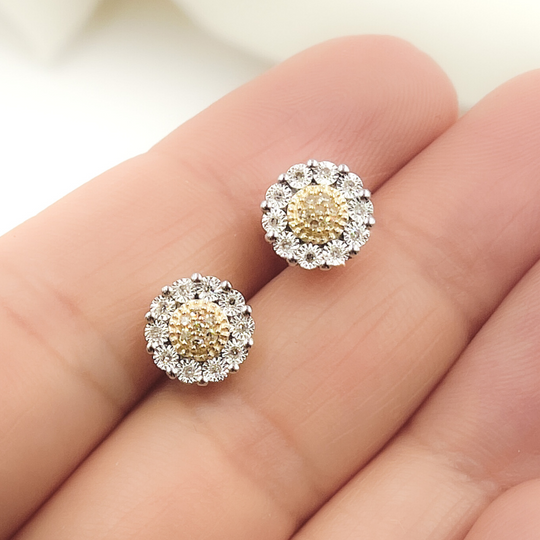
Pavé studs feature a cluster of small diamonds set tightly together to create the illusion of a larger stone. They have significant visual impact at a fraction of the cost of a single large diamond.
The Real Difference Between Lab Grown and Natural Diamond Studs
This question comes up constantly and the answer is more nuanced than most people expect.
Lab grown diamonds are physically, chemically, and optically identical to mined diamonds. They are not simulants like cubic zirconia or moissanite. They are real diamonds, grown in a controlled environment using the same carbon crystallization process that happens underground. A gemologist with standard tools cannot tell them apart without specialized equipment.
What is different is price and long-term value.
Lab grown diamonds cost 50 to 80 percent less than comparable natural diamonds right now. For stud earrings for women where you want visible size without a massive budget, lab grown stones let you buy a 1.0 carat total weight pair at a price that would only get you 0.3 to 0.4 carats in natural diamonds.
The tradeoff is resale value. Natural diamonds hold their value reasonably well over decades. Lab grown diamonds have been dropping in resale value as production scales and prices fall. If you are buying studs as an investment or heirloom, natural diamonds make more financial sense. If you want maximum visual impact for the budget and do not plan to resell, lab grown is a genuinely smart choice.
Either way, insist on certification. GIA and IGI both certify lab grown diamonds with the same rigor as natural ones. An uncertified stone of either type is a risk not worth taking.
How to Match Stud Size to Your Face and Style

This is something most online guides skip entirely. Stud size matters for proportion and how the earring reads visually.
General guidelines:
- Small face or delicate features: 0.25 to 0.5ct equivalent size. Larger stones can overwhelm smaller features.
- Average face: 0.5 to 1.0ct is the most flattering range for everyday wear.
- Larger face or strong features: 1.0ct and above, or cluster designs that create visual size.
- Professional or office settings: Smaller studs read as polished and intentional. Keep it under 1.0ct for most work environments.
- Evening or formal wear: This is where larger stones or pavé designs justify themselves.
For stud gold earrings for women specifically, yellow gold with a round stone reads warmer and more traditional. White gold or platinum reads more contemporary. Match the metal to your other jewelry if you wear pieces consistently together.
How to Care for Your Stud Earrings
Cleaning: Soak in warm water with a drop of dish soap for 10 minutes. Use a soft toothbrush to gently clean around the setting and behind the stone. Rinse and pat dry with a lint-free cloth. Do this once a month for everyday pairs.
Storage: Keep studs in individual compartments or a soft pouch to prevent scratching against other pieces. Storing loose in a jewelry box leads to scratched metals and dulled stones over time.
Backs: Replace butterfly backs every year or two. They lose their grip over time. A new back costs almost nothing and prevents losing a valuable earring.
Professional cleaning: Once a year, have your fine jewelry cleaned and inspected by a jeweler. They will check prong integrity, clean areas you cannot reach, and catch any setting issues before they become a lost stone.
Where to Buy Stud Earrings You Can Actually Trust
The online jewelry market is full of misleading listings. "Gold" earrings that are plated brass. "Diamond" earrings with no certification and no actual diamond grading. "Sterling silver" pieces without a 925 hallmark.
What to look for in an online jewelry retailer:
- Full material disclosure on every product page (karat, gram weight, stone details)
- Certification for any diamonds sold
- Clear return and exchange policy
- Real customer reviews with specifics, not generic five-star text
- Hallmarked pieces only
- Contact information and a real address
Jewels & Chains carries a curated range of stud earrings across gold, silver, and diamond options with transparent material details. If you are building a jewelry collection and want a starting point for quality reference, their catalog is worth reviewing.
FAQs About Stud Earrings for Women
1. What is the most popular stud earring size for everyday wear?
For most women, 0.25 to 0.5 total carat weight (or equivalent visual size in gemstones) is the most practical for daily wear. It is noticeable without being heavy or distracting. 0.5 to 1.0ct is the most popular range for special occasion pieces that still get regular use.
2. Are diamond stud earrings for women a good investment?
Quality diamond studs in certified grades hold value better than most jewelry. They are not liquid investments but they do not lose value the way fashion jewelry does. A well-purchased pair of certified diamond studs in 14K or 18K gold will still have resale value decades later.
3. What is the difference between 14K and 18K gold stud earrings?
14K gold is 58.5% pure gold with added metals for hardness. It is more durable and more affordable. 18K is 75% pure, softer, and better for sensitive skin. For everyday studs, 14K gold stud earrings for women are the practical standard. For heirloom pieces or sensitive ears, 18K is worth the premium.
4. Can I sleep in sterling silver stud earrings?
You can, but it accelerates tarnishing. Sweat and body oils react with silver overnight. If you want to keep a pair in permanently, solid gold is more practical for long-term continuous wear.
5. How do I know if my rose gold earrings are real gold?
Look for a hallmark. Real rose gold stud earrings for women should be stamped 10K, 14K, or 18K. Rose gold plated pieces may look identical but will show base metal within months of wear. If there is no hallmark, ask for material documentation.
6. Are screw back earrings better than butterfly backs?
For valuable pieces, yes. Screw backs require deliberate twisting to remove, which means they are much harder to lose accidentally. Butterfly backs are easier and faster but can come loose with hair contact or clothing. For diamond or high-value gold studs, screw backs are the smarter choice.
7. What stud earrings are best for sensitive ears?
18K yellow gold, platinum, and implant-grade titanium are the best options for sensitive or reactive ears. Nickel is the most common irritant in jewelry alloys. White gold often contains nickel, so yellow gold or platinum is safer if you have had reactions before. Sterling silver stud earrings for women are generally fine for most people but occasionally cause sensitivity due to the copper content.
