

White gold chains come in the same link constructions as yellow gold, cable, box, curb, rope, and a dozen others, but the finish changes how each one reads. That cooler, silvery tone shifts the whole personality of a style that might look completely different in yellow.
A big share of what's sold as white gold also comes in a diamond-cut version, meaning the metal itself is faceted during manufacturing so it catches light differently at every angle. Once you know that distinction, the types of white gold chains on the market start making a lot more sense.
Here's a rundown of the different types of white gold chains you'll come across shopping, what makes each construction unique, and where diamond-cut options fit into the picture.
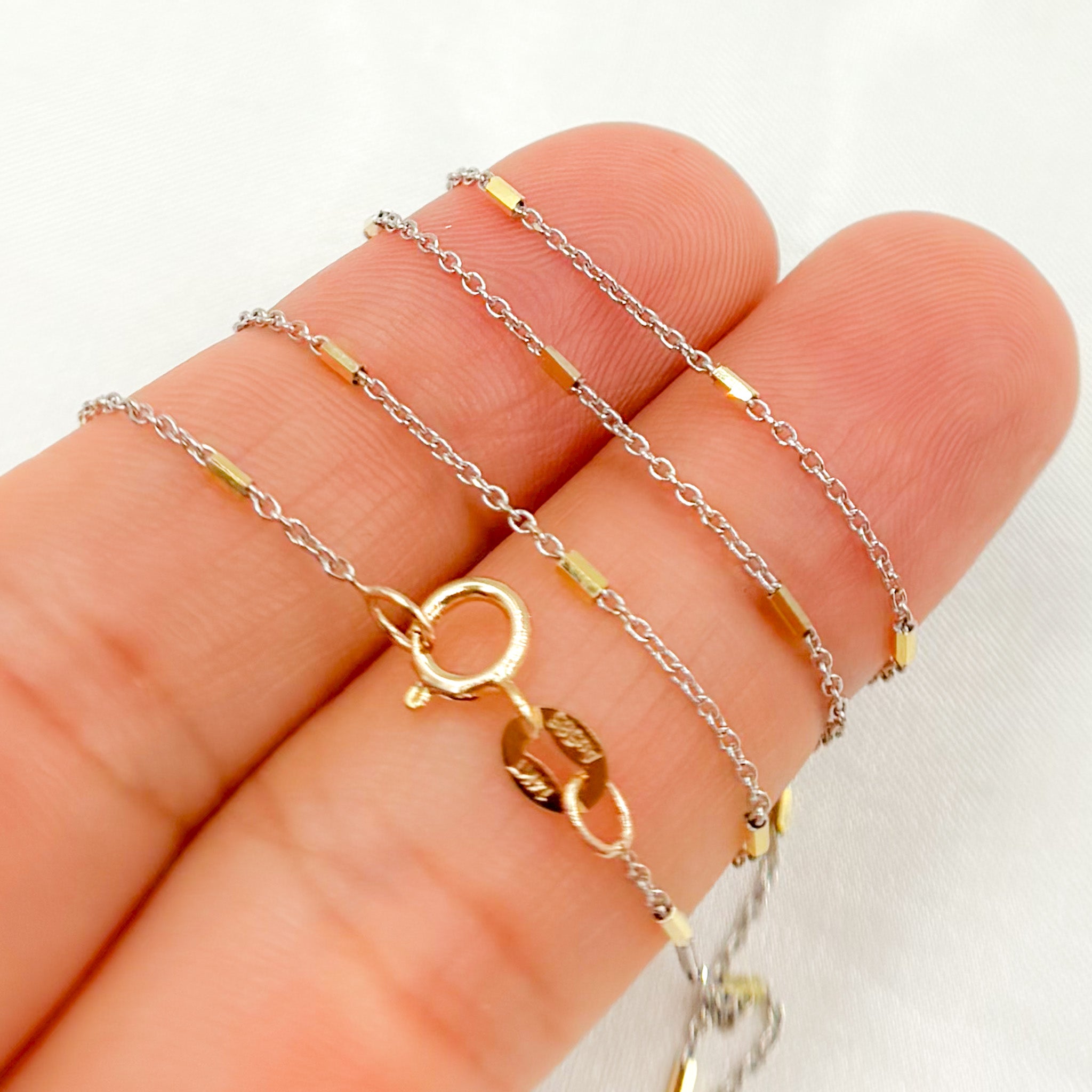
14k Solid Gold Satellite Bars Chain
VIEW PRODUCT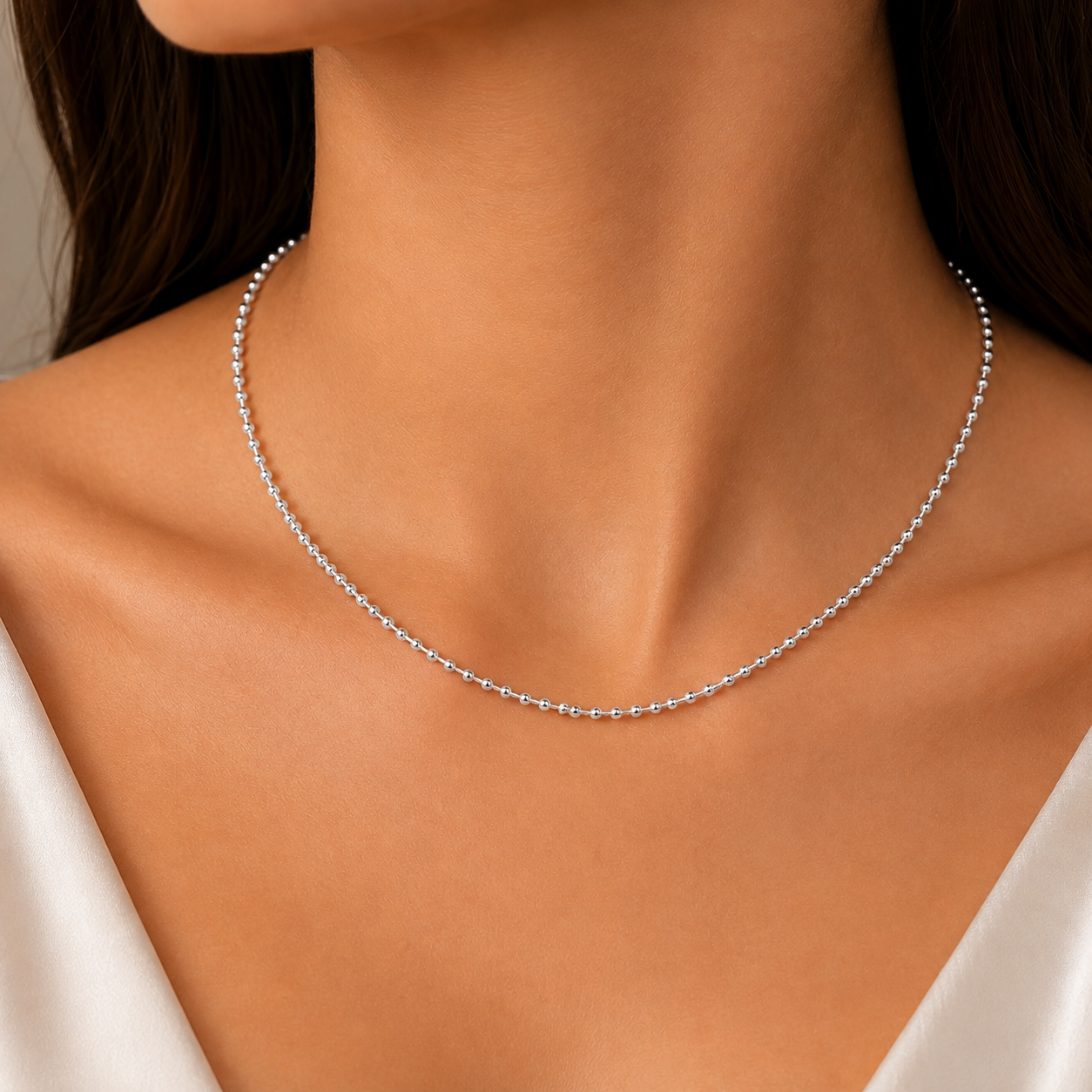
14K Solid White Gold Ball Necklace
VIEW PRODUCT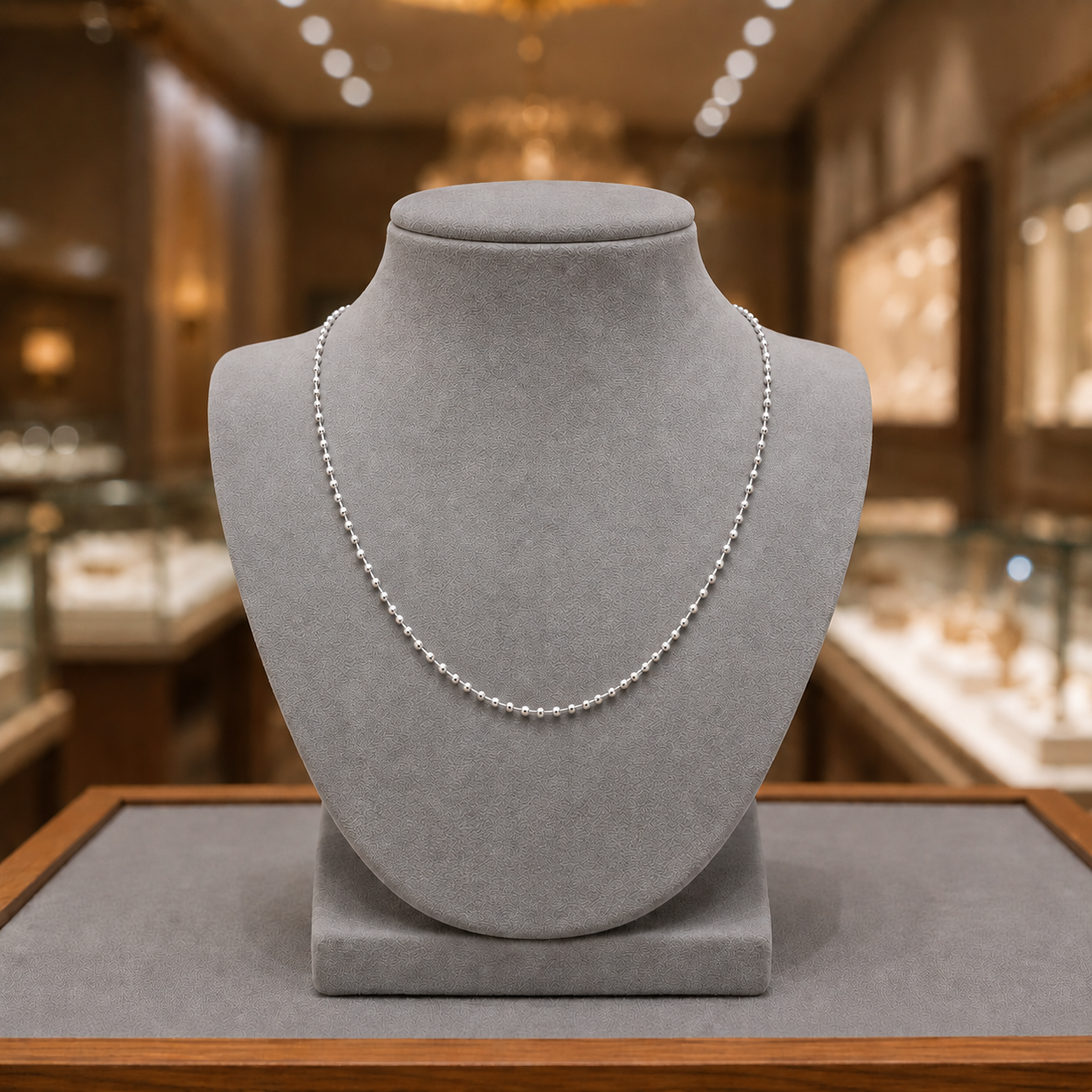
14K Solid White Gold Bead Chain
VIEW PRODUCT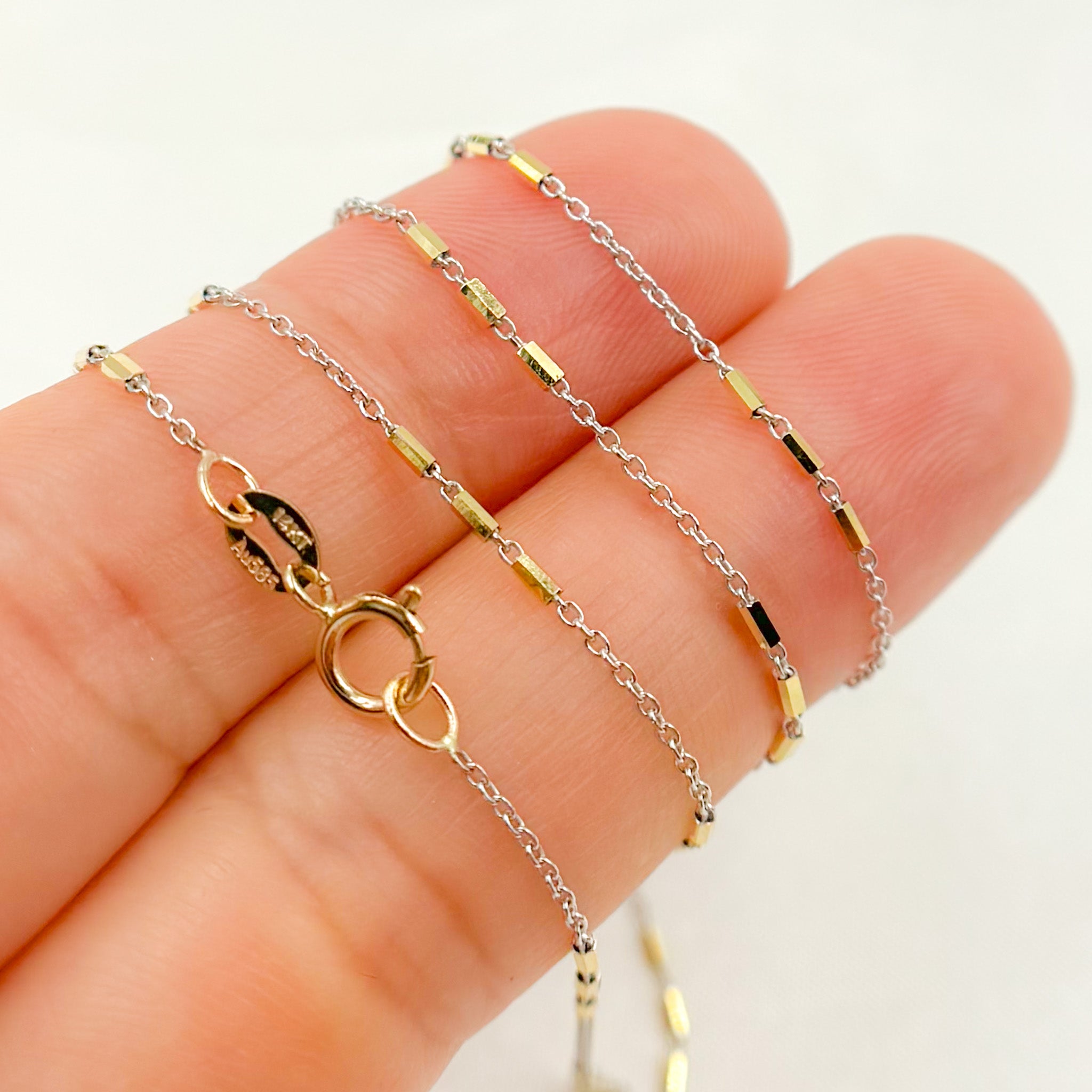
025R02E3TP0G8L. 14K Solid Gold Satellite Bar Chain
VIEW PRODUCTWhat Are the Different Types of White Gold Chains?
White gold chains vary the same way any gold chain does: link shape, arrangement, thickness, texture, flexibility, weight, and finish. What sets white gold apart specifically is the alloy mix and, in most cases, a rhodium plating layer that gives it that bright, cool-toned shine.
Link shape and construction are what actually define the "type" of chain, cable, box, curb, and so on. Whether it's diamond cut or smooth (also called plain) is a separate variable layered on top of that, affecting shine and texture rather than the core link pattern.
The most common styles you'll run into include cable, box, curb, figaro, rope, Singapore, wheat, snake, Franco, and herringbone. Most of these are available in both smooth and diamond-cut finishes, depending on the supplier.
Cable Chain
Round or oval links, connected in a simple, repeating loop. In white gold, the cool tone makes the classic cable look even cleaner and more minimal than it does in yellow.
Lightweight, flexible, and easy to layer. A pendant hangs naturally on a cable chain since the links don't twist or catch, which is part of why it's such a common starting point for chain-by-the-foot orders.
Box Chain
Square links joined at right angles, giving a smooth, continuous line from a distance with small geometric segments visible up close. The flat construction resists twisting better than cable, which makes it a solid pick for pendants with real weight.
White gold box chains have a clean, almost architectural look. Minimal, structured, layers well against something with more texture.
Curb Chain
Flattened, interlocking links that lie flat against the skin. Chunkier curb chains read as a statement piece on their own, while finer gauges work fine as an everyday layer.
The interlocked construction makes curb chains durable for their weight, and white gold's brighter tone tends to make the flattened links catch more light than the same chain in yellow gold.
Figaro Chain
Alternates one or two short oval links with one longer link, repeated down the chain. That rhythm is easy to spot even at a glance.
Depending on thickness, a white gold figaro works as a subtle everyday piece or a bolder standalone one. The mixed link sizes give it more visual movement than a plain cable chain.
Rope Chain
Small links twisted tightly into a spiral, which is where the name comes from. This is one of the most common styles to see in a diamond-cut finish, since the faceted surface plays especially well with the twisted construction.
Rope chains generally run heavier than cable or box at the same length. A diamond-cut rope chain in white gold throws noticeably more sparkle than a smooth one, since every twist catches light from a different angle.
Singapore Chain
Diamond-cut links twisted into a fine spiral, which means this style is almost always sold with faceting baked into the construction itself rather than as an optional finish. Delicate, shimmery, built for layering rather than heavy pendants.
White gold amplifies the shimmer of a Singapore chain compared to yellow, since the cooler tone reflects light a bit differently.
Wheat Chain
Also called a spiga chain. Multiple oval links twisted together so the finished piece resembles a stalk of wheat, texture included.
Fairly strong, resistant to kinking, and suited to both solo wear and layering. In white gold, the braided texture reads a bit more subtle than in yellow, since there's less contrast between the shine and shadow of each twist.
Snake Chain
Tightly connected, flexible plates instead of visible links, giving a smooth, almost liquid surface. From a normal distance you can't make out individual links at all.
Sleek and modern, holds its shape without kinking. Works best with a pendant that has a simple bail rather than anything ornate.
Franco Chain
Square links woven in a box-and-braid pattern, giving a faceted, multi-sided look. Think of it as a more textured cousin of the box chain.
The weave makes Franco chains durable and resistant to twisting. Thicker versions tend to get worn as standalone statement pieces.
Herringbone Chain
Flat, tightly packed links in a diagonal, overlapping pattern that reads more like a ribbon than a chain. Distinctive shine, flat profile against the skin.
This is a statement chain, usually worn alone since the flat surface doesn't hold pendants well and can kink without careful handling.
What Is a Diamond-Cut White Gold Chain?
"Diamond cut" isn't a chain style on its own. It's a manufacturing technique where tiny facets are cut into the surface of the links, similar to how a gemstone is faceted, so the metal reflects light from multiple angles instead of one smooth surface.
Rope, Singapore, curb, and figaro chains are the styles most commonly sold with a diamond-cut finish, since their link shapes lend themselves well to faceting. A types of 14kt white gold diamond cut chains for necklaces search usually turns up exactly these constructions, sold specifically for the extra sparkle the cut adds.
Diamond-cut chains tend to show more brightness and contrast than smooth (plain) versions of the same style. The trade-off is that the cut surfaces can be a little more prone to fine scratches showing over time, simply because there's more surface detail to catch light and wear both.
That covers all of the types of white gold chains most shoppers and designers are likely to ask about, smooth and diamond cut alike.
Types of 14kt White Gold Chains for Necklaces
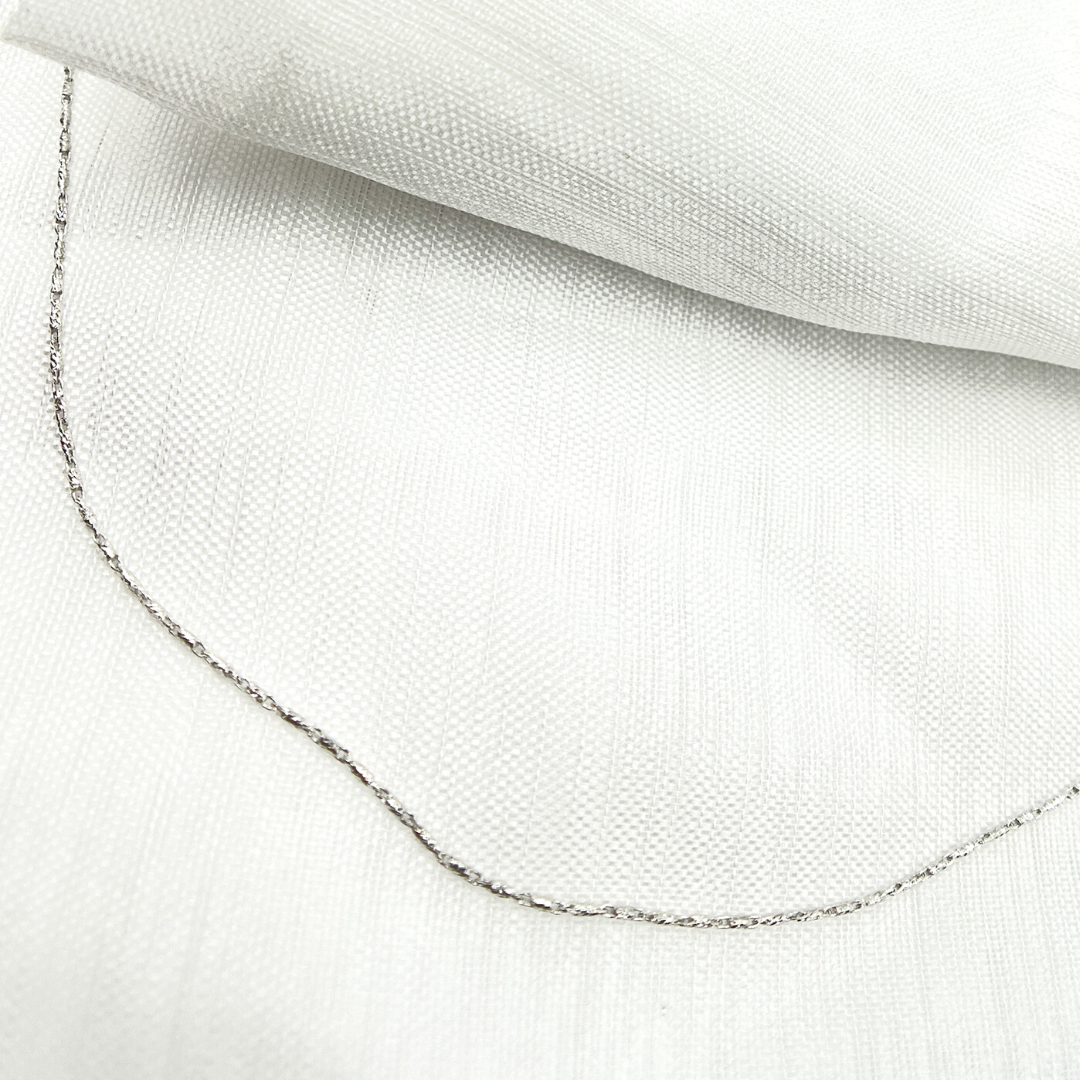
14K Solid White Gold Diamond Cut Bar Chain
VIEW PRODUCT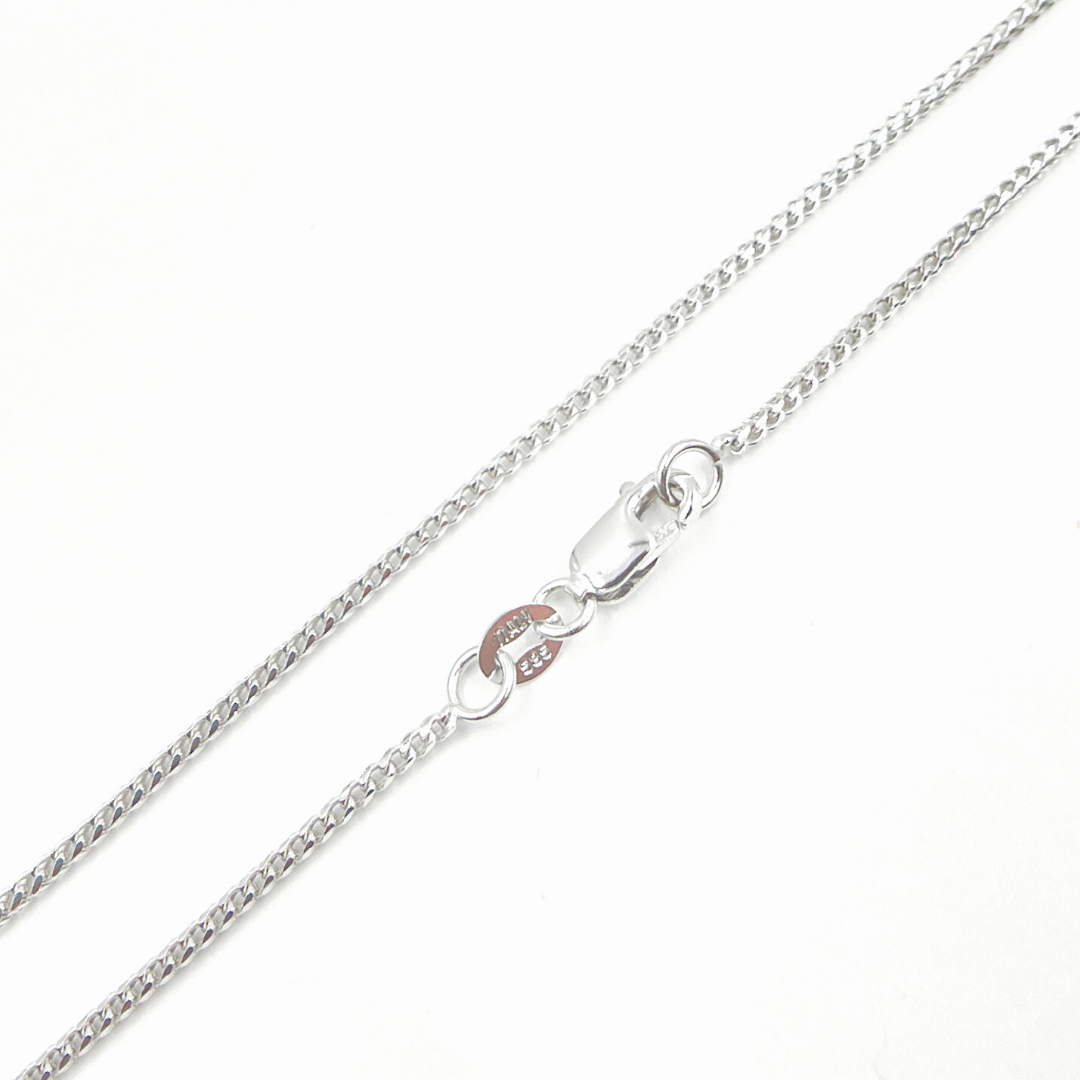
14K Solid White Gold Wheat Chain
VIEW PRODUCT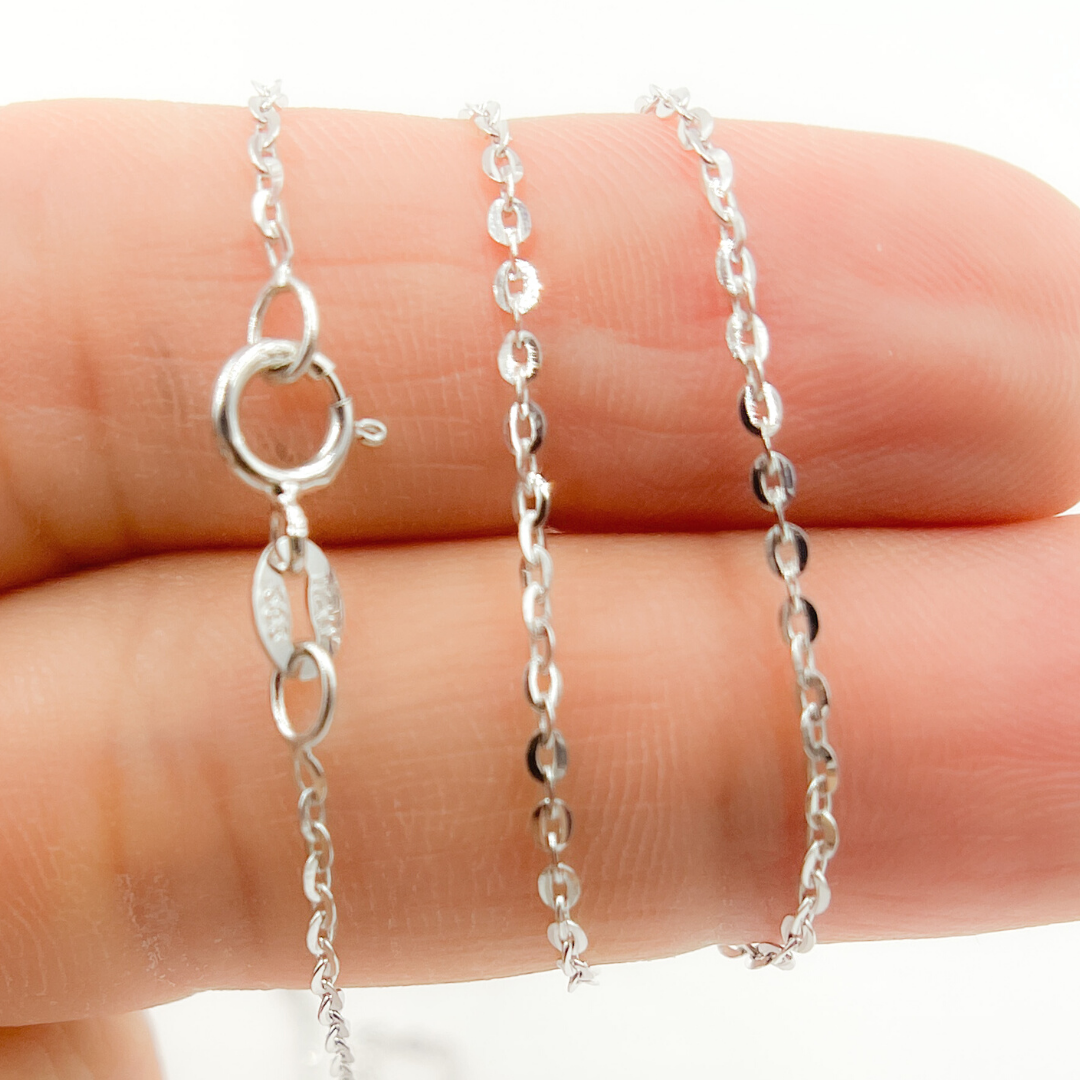
034R08BFL4L024WG. 14K Solid White Gold Cable Chain
VIEW PRODUCT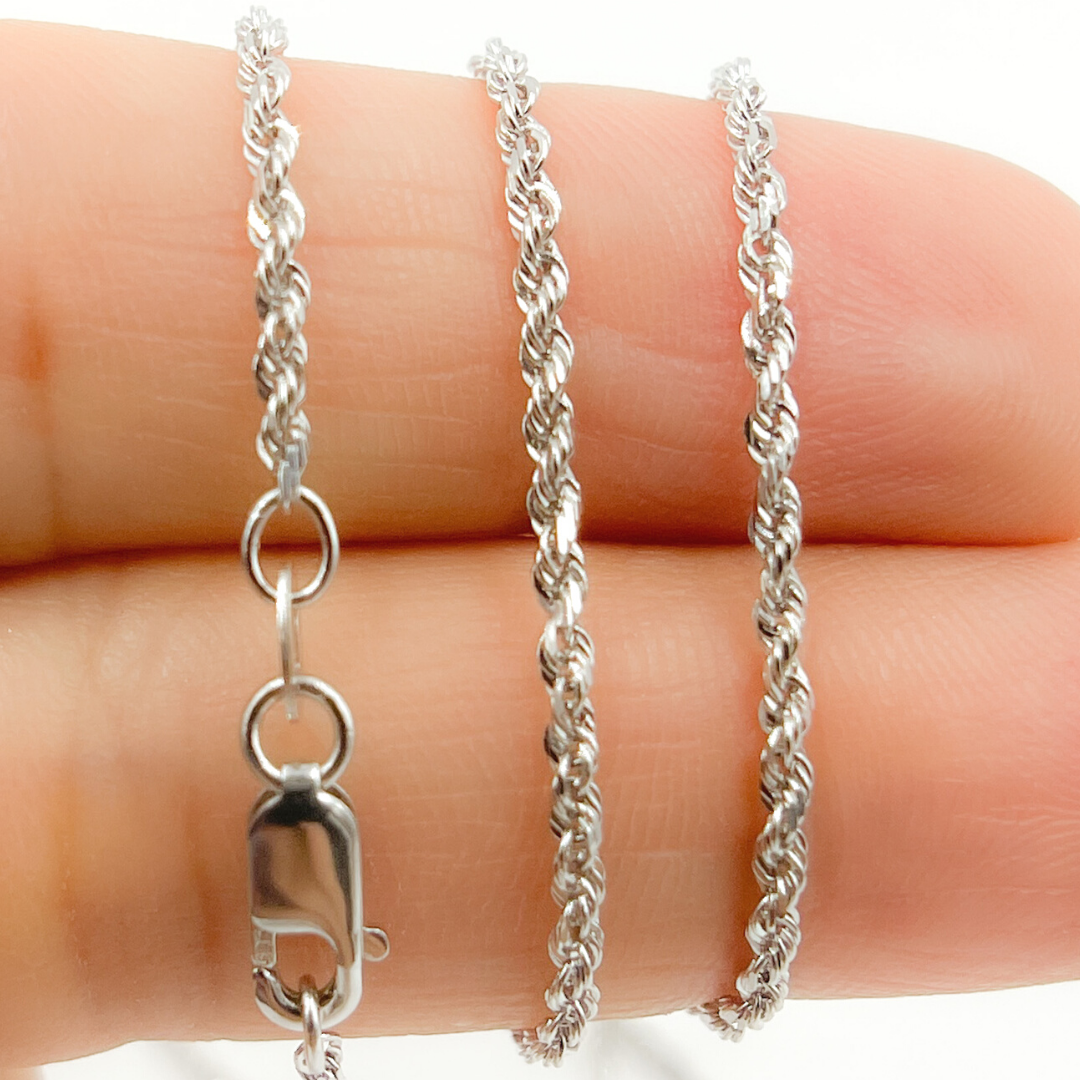
14K Solid White Gold Rope Chain
VIEW PRODUCT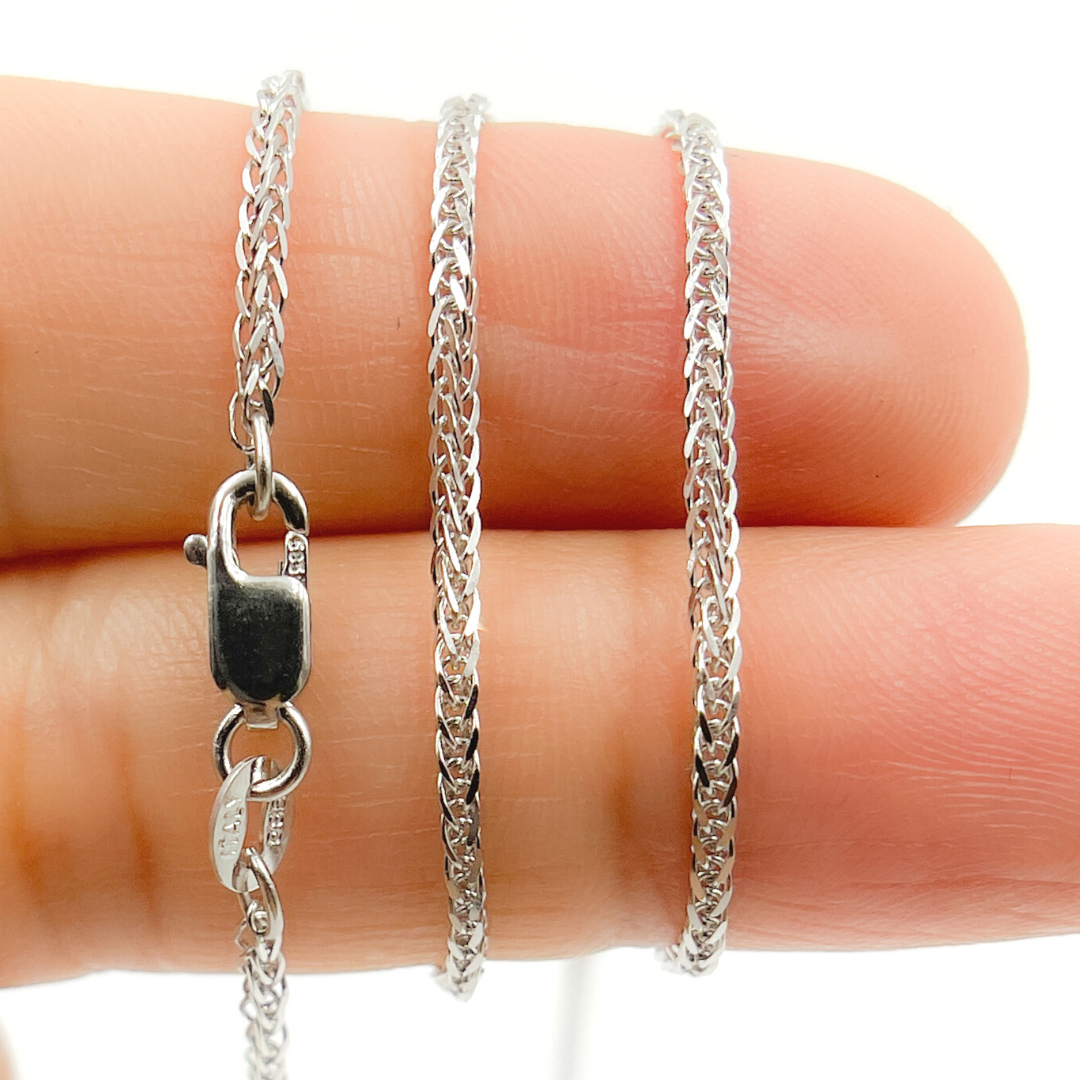
14K Solid White Gold Wheat Chain
VIEW PRODUCTA finished necklace chain differs from a raw chain style in a few practical ways. Length changes where it sits against the collarbone, and the same construction can look completely different at 16 inches versus 24. Thickness and weight affect comfort over a full day, and pendant compatibility depends on both the link construction and the gauge.
For types of 14kt white gold chains for necklaces specifically, 14kt is the most common purity for everyday and wholesale chain, since the alloy mix (roughly 58.3% pure gold) holds up to regular handling better than higher purities. Whether the chain is smooth or diamond cut doesn't change the karat, and vice versa, the two are independent choices.
Clasp type matters more for necklaces than for chain sold by the foot, since a lobster clasp or spring ring needs to hold up to daily opening and closing without weakening the last few links.
White Gold vs Yellow Gold: Does Metal Color Change Chain Style?
Metal color and chain style are two separate decisions. White gold gets its color from the alloy mix, typically gold combined with metals like palladium or nickel, and in most cases a thin rhodium plating on top for extra brightness. Yellow gold uses a different alloy blend and keeps gold's natural warm tone.
Any chain style, cable, box, rope, whatever, can be made in either color. The link pattern stays the same. What changes is how the finish reads: white gold tends to show diamond-cut faceting a bit more sharply, since the cooler tone contrasts more with shadow than yellow does.
Rhodium plating on white gold chains does wear over time with regular contact and cleaning, and can eventually need replating to keep that bright white finish. That's a normal part of owning white gold jewelry rather than a defect.
Which White Gold Chains Are Best for Pendants?
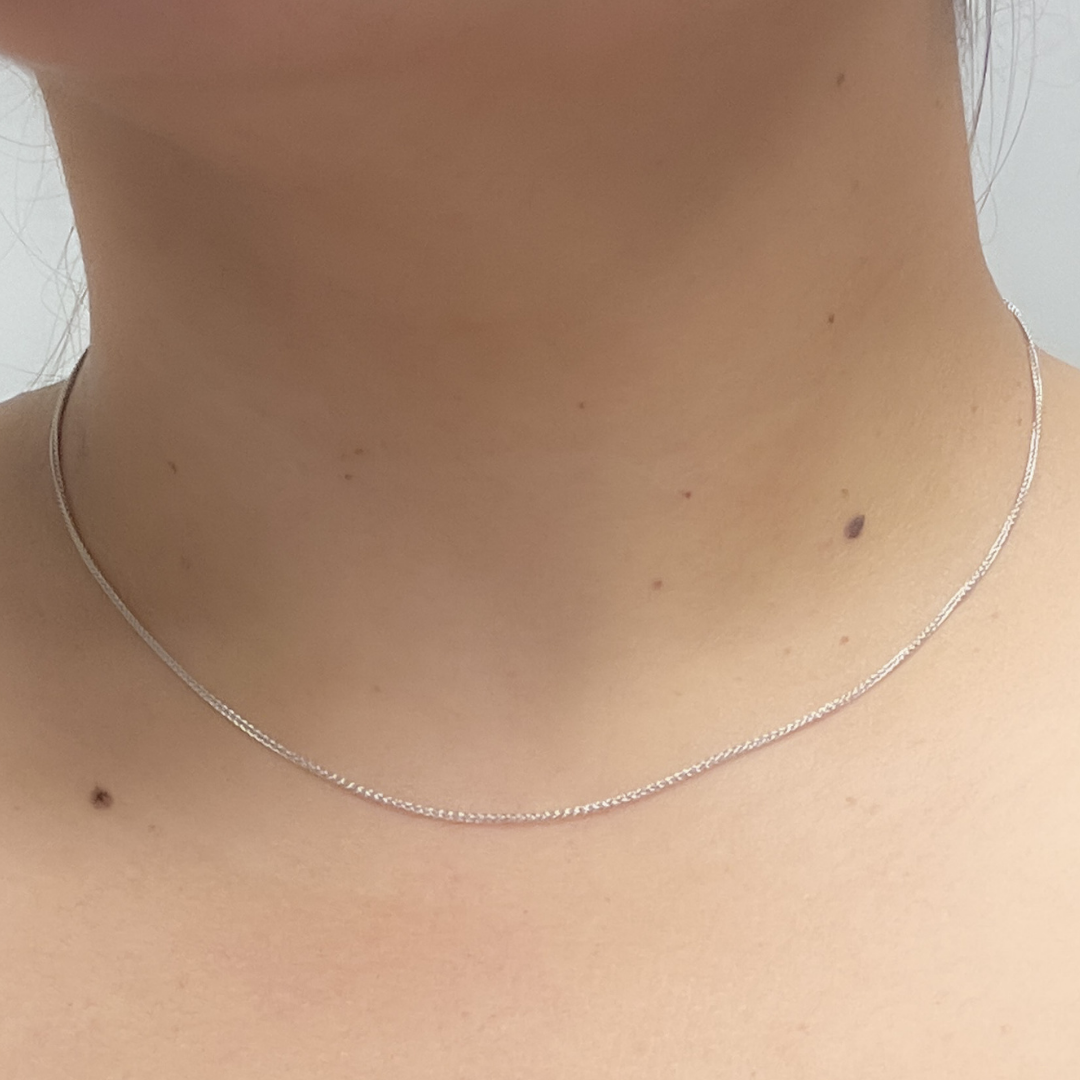
Box chains are a dependable choice, since the flat, stable links resist twisting under a pendant's weight. Cable chains work well for lighter pendants too, letting the charm swing freely without catching.
Rope and diamond-cut chains can carry a pendant, but the textured surface pairs best with a pendant that has a simple, sturdy bail. Singapore chains are really only suited to small, light pendants given how fine the gauge usually is.
As always, pendant weight and chain thickness need to be matched to each other. A heavy pendant on a chain that's too delicate risks stretched links or an uneven hang.
Which White Gold Chains Are Best for Layering?
Contrast is what makes layering work, different lengths, different link sizes, different textures. Stacking the same chain style at multiple lengths tends to look flat instead of intentional.
A practical starting stack:
- A 16-inch delicate chain close to the collarbone
- An 18-inch diamond-cut or textured chain in the middle
- A 20-inch chain holding a pendant as the longest piece
Pairing a substantial chain, like curb or Franco, with something finer, like cable or Singapore, adds contrast without looking cluttered.
White Gold Chain Styles for Everyday Wear
Daily-wear suitability comes down to construction more than name. Flexible chains that move naturally with the body are more comfortable than stiff ones, and link strength matters for handling regular contact, showers, and general wear.
The clasp is easy to overlook but makes a real difference for a chain worn constantly. Textured or diamond-cut chains can show wear on the faceted surface a little sooner than smooth chains, simply from the extra surface detail catching everyday friction.
A fine curb or box chain in white gold tends to be just as practical for daily wear as a plain cable chain, and the diamond-cut finish doesn't change how sturdy the underlying construction is.
How to Choose the Right White Gold Chain Style
|
If You Want... |
Consider... |
|
Minimal everyday style |
Cable, box, or fine curb chain |
|
A pendant chain |
Box, cable, or rope chain |
|
Extra sparkle and shine |
Diamond-cut rope, curb, or Singapore |
|
Layered styling |
Cable, Singapore, or fine figaro |
|
Bold statement look |
Curb, herringbone, or Franco |
|
Wholesale or chain-by-the-foot needs |
Cable, box, or curb in bulk lengths |
There's no single "correct" chain here either. Matching construction and finish to how the piece will actually be worn matters more than the name on the listing.
14kt White Gold Chain Thickness, Length and Weight
Chain style alone doesn't tell the full story of how a piece wears. Length changes where it sits relative to the collarbone, and thickness drives visual weight, a thin cable chain always reads delicate, while a thick curb chain reads substantial regardless of length.
Weight matters for comfort across a full day, especially for anything worn constantly, and pendant weight adds one more variable since it changes how the chain drapes. Neckline plays a role too: higher necklines tend to suit shorter chains, while lower necklines give a longer chain more room to sit right.
White Gold Chain Care
A few habits go a long way toward keeping white gold looking its best.
- Store chains separately so clasps and links don't tangle with other pieces
- Clean according to the specific product's care instructions, since finishes vary
- Keep chains away from harsh chemicals, including strong cleaning products, chlorine, and certain lotions or perfumes
- Remove chains before activities involving heavy friction or impact
- Expect rhodium-plated pieces to eventually need replating to maintain that bright white finish
Following the specific product's care instructions is always the safest approach, since diamond-cut and smooth finishes don't always respond the same way to cleaning.
Which White Gold Chain Style Is Right for You?
There's no single "best" white gold chain, it depends on how you're planning to wear or sell it.
Minimal styling: cable or box. Pendants: box, cable, or rope. Extra shine: diamond-cut rope, curb, or Singapore. Layering: thinner cable or Singapore chains, for flexibility. Statement looks: curb, herringbone, or Franco, chains substantial enough to carry a look alone.
For everyday wear, simple, sturdy construction with a secure clasp matters more than the specific style name.
Frequently Asked Questions
What are the different types of white gold chains?
Cable, box, curb, figaro, rope, Singapore, wheat, snake, Franco, and herringbone cover the styles you'll see most, in both smooth and diamond-cut finishes.
What does diamond cut mean on a white gold chain?
It's a manufacturing technique where facets are cut into the metal's surface so the chain reflects light from more angles, giving it extra sparkle compared to a smooth finish.
Which white gold chain is best for a pendant?
Box and cable chains are generally the most dependable, since their construction resists twisting and lets a charm hang naturally.
Which white gold chain is best for layering?
Thinner cable, Singapore, and fine figaro chains work best, since their delicate profiles let you stack multiple lengths without clutter.
Does white gold need more maintenance than yellow gold?
Rhodium-plated white gold can need occasional replating to keep its bright finish, which is a normal part of ownership rather than a sign of poor quality.
How do I choose the right 14kt white gold chain for a necklace?
Start with how it'll be worn, alone, layered, or with a pendant, then match that to construction, thickness, and whether you want a smooth or diamond-cut finish.
